

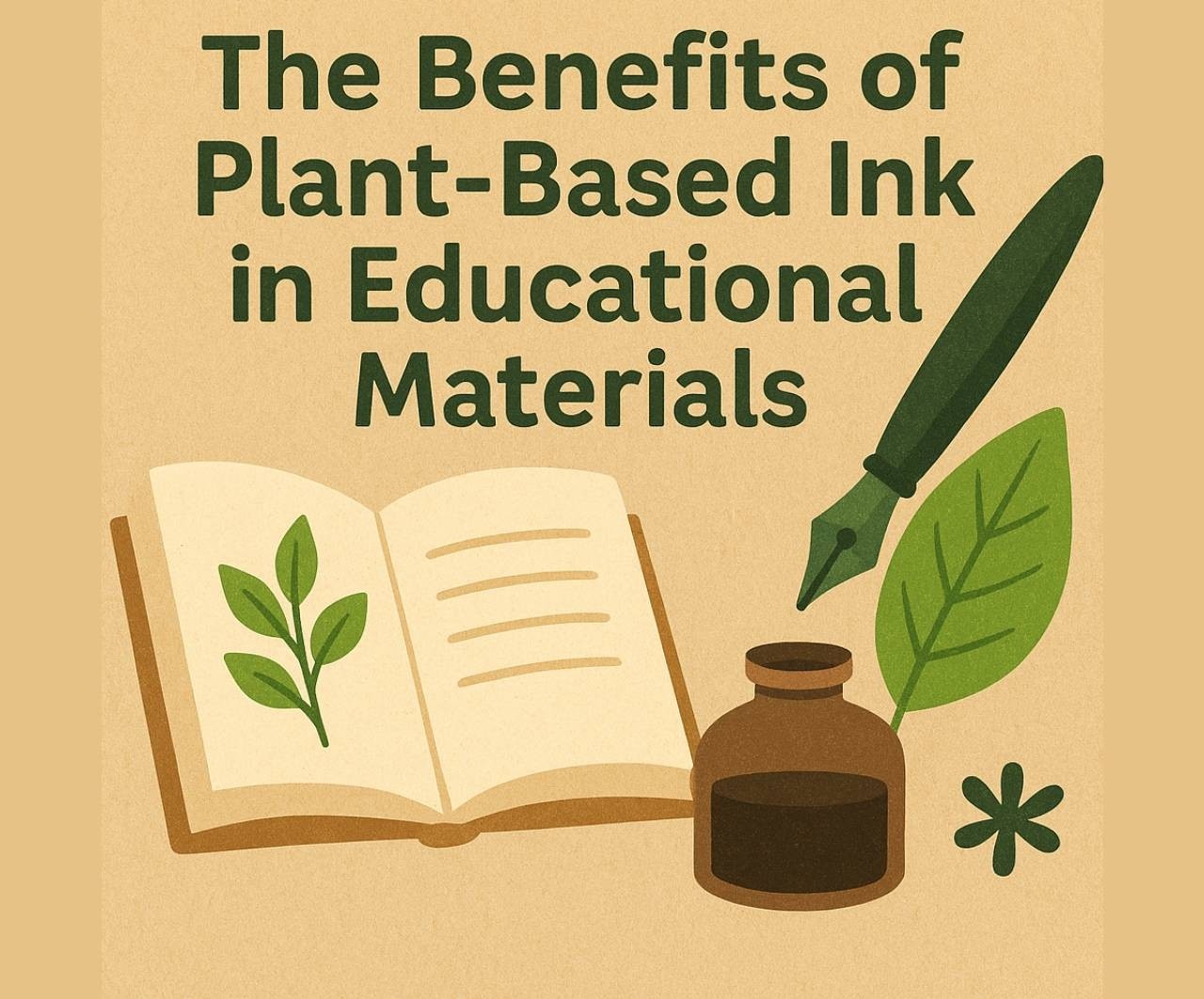
As schools shift toward sustainability, one small but powerful change is gaining traction: plant-based ink. It might seem like a tiny detail, but what covers the pages of notebooks, flashcards, and other educational materials can impact both our environment and our health. For classrooms that care about cleaner learning spaces, safer materials, and lower carbon footprints, choosing eco friendly school supplies, non toxic school supplies, and sustainable school supplies—especially those using plant-based ink—is the smart move. Know more..
What Is Plant-Based Ink?
Plant-based ink is made from renewable resources like soybeans, linseed, or other vegetable oils. Unlike petroleum-based inks, which are heavy on volatile organic compounds (VOCs) and harsh chemicals, plant-based ink is biodegradable, gentler on the environment, and much safer for students to handle.
Today, more companies producing eco friendly school supplies are switching to these inks for textbooks, worksheets, notebooks, posters, and even packaging. They print just as vibrantly as conventional ink, but with significantly less environmental harm.
Why Ink Matters More Than You Think
When we talk about sustainable learning, we often focus on recycled paper or reusable materials—but the ink printed on those pages can be just as impactful. Standard inks can contain heavy metals, petroleum solvents, and harmful chemicals that off-gas into classroom air or leach into soil and water during decomposition.
That’s where non toxic school supplies come in. Using plant-based ink reduces classroom exposure to chemical fumes and minimizes the environmental impact when paper materials are discarded or recycled.
Imagine a school full of posters, flashcards, and reading books—all printed with clean, biodegradable ink. That’s not just better for the Earth; it’s better for our kids, too.
1. Healthier Classrooms for Students and Teachers
Let’s start with the obvious: students (especially younger ones) touch, sniff, and sometimes even chew their school materials. That’s why switching to non toxic school supplies is essential.
Plant-based ink doesn’t emit dangerous VOCs like conventional ink does. This means:
- Cleaner indoor air with fewer allergens and pollutants
- Reduced respiratory risks for kids with asthma or sensitivities
- Less skin irritation from contact with worksheets, crafts, and books
Teachers, who handle printed materials all day, also benefit from fewer chemical exposures.
2. Supporting Eco-Friendly Printing Practices
More printers and publishers are adopting eco friendly school supplies standards, and plant-based ink is a major piece of that puzzle. Unlike petroleum-based ink, which is derived from finite resources, plant-based ink is renewable and biodegradable.
Here’s what this means in practice:
- Lower carbon emissions during production
- Easier de-inking during paper recycling
- Less energy needed to manufacture the ink
Plus, many plant-based inks are paired with water-based coatings and printed on recycled or FSC-certified paper. That makes them a triple-win for sustainability.
3. Better Print Quality and Color Performance
You might be surprised to learn that plant-based inks—especially soy-based ones—actually produce sharper images and brighter colors. In fact, many textbook publishers have moved to soy ink for exactly this reason.
For classrooms that rely on visuals—diagrams, color-coded charts, and illustrated materials—this is great news. Sustainable school supplies no longer mean sacrificing quality. You can have brilliant, high-resolution educational materials and feel good about what’s behind the ink.
4. Encouraging Eco-Conscious Habits in Students
Education isn’t just about facts—it’s about values. When schools adopt sustainable school supplies, including materials printed with plant-based ink, they’re sending a message to students: your everyday choices matter.
Kids notice the “green leaf” logos, the recycled paper textures, and the “printed with soy ink” stamps. These visual cues teach them that sustainability is part of learning—and living.
Classroom activities can even involve:
- Comparing packaging of different school supplies
- Reading labels to spot eco-certifications
- Designing posters that promote green practices using eco friendly school supplies
That’s how we raise the next generation of mindful consumers.
5. Cost-Effective Over Time
Initially, non toxic school supplies and plant-based inks may seem more expensive—but the long-term benefits outweigh the upfront cost. Why?
- Less medical risk from exposure-related illnesses
- Less environmental cleanup from toxic materials
- Increased recyclability, saving money in waste management
As more companies adopt plant-based inks, the cost of producing and purchasing sustainable school supplies is dropping fast. Bulk educational orders are often available at competitive prices.
6. Ideal for All Levels of Learning
Whether you’re running a preschool or a university, plant-based ink has a place. It’s already being used in:
- Elementary worksheets and flashcards
- High school notebooks and planners
- College textbooks and syllabi
- Art supplies, coloring books, and activity pages
And since the ink is safe for sensitive skin and noses, it’s perfect for early learners who spend more time touching, smelling, and exploring their supplies.
7. Aligning with Green Certifications and School Policies
Many schools are working toward sustainability benchmarks like LEED certification or Green School recognition. Using eco friendly school supplies, including those with plant-based ink, helps meet those goals.
When a district switches to sustainable school supplies, they’re also more likely to receive:
- Grant funding for eco-initiatives
- Recognition from environmental education organizations
- Community support from eco-conscious parents and local governments
It’s a small change that supports big results.
How to Find Plant-Based Ink Products
More companies are including labels like “Printed with Soy Ink,” “Vegetable-Based Ink,” or “Bio-Based Ink” on their packaging. When shopping for school supplies, especially bulk materials, look for:
- Recycled or FSC-certified paper
- Non-glossy, water-based coatings
- Clearly labeled plant-ink certification (often with a green droplet or leaf icon)
- Brands that specialize in non toxic school supplies
You can also ask suppliers or print shops if they use eco-friendly ink—and if not, encourage them to start.
Final Thoughts
The switch to plant-based ink might seem like a tiny tweak in the big picture of education—but it’s these small details that build a healthier, smarter future. From sharper visuals to cleaner air, from safer hands to happier trees, the benefits add up fast.
When we choose eco friendly school supplies, prioritize non toxic school supplies, and invest in sustainable school supplies like those using plant-based inks, we’re not just upgrading materials—we’re upgrading mindsets.
It’s more than ink on a page. It’s a message written loud and clear: sustainability belongs in every classroom.
Ready to stock your shelves with greener tools? Start with the basics: paper, notebooks, posters—all printed with the planet in mind. Because every word students read should build a better world.